

Date:2026-07-30 Click:325
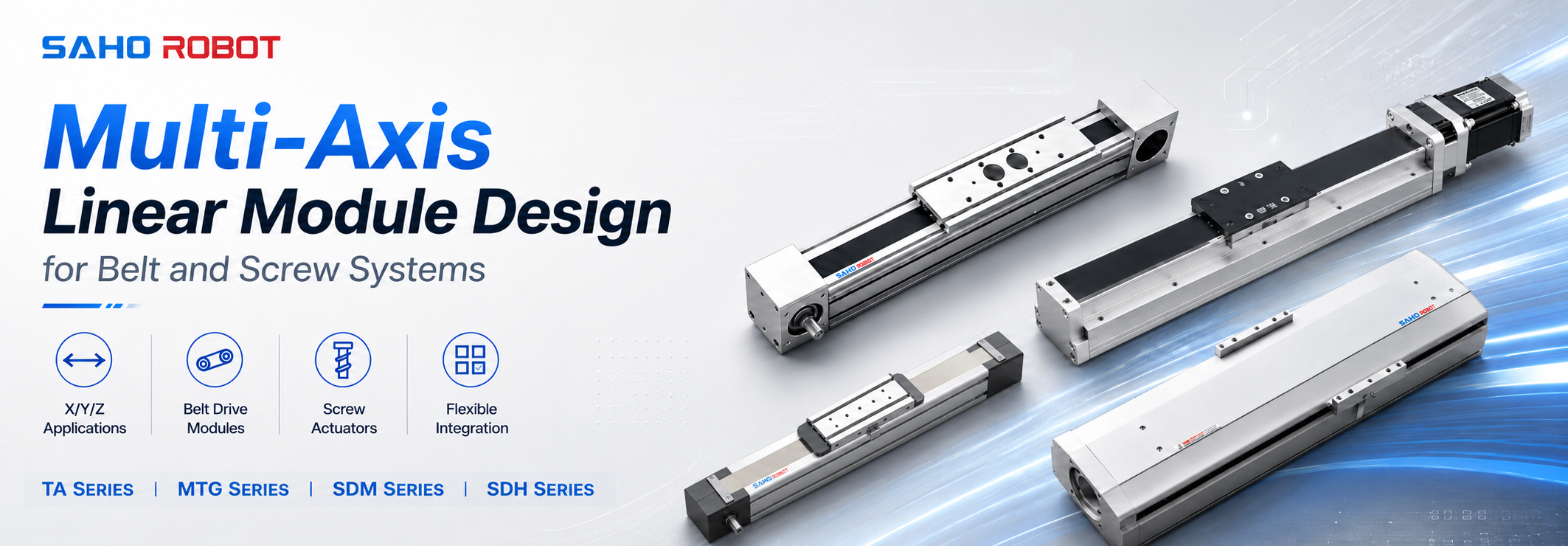
A multi-axis linear module structure should be selected by axis role, not by using one actuator type everywhere. In most X/Y/Z automation layouts, the X and Y axes are reviewed for transfer speed, stroke length, moving mass, and gantry support, while the Z axis is reviewed for lifting stability, thrust support, brake planning, and vertical positioning.
This guide explains how to combine belt-driven and screw-driven linear modules in a practical multi-axis system. It does not simply introduce one product series. It explains when to use TA Series or MTG Series for X/Y transfer, when to use SDM Series or SDH Series for screw-driven positioning and Z-axis movement, and when higher-requirement series should be reviewed as references.
The correct selection process starts from the machine layout. X may need long transfer. Y may need cross travel or local alignment. Z may need lifting, short-stroke positioning, and load holding. Higher-rigidity, protected, or special-environment modules should be reviewed only when the working conditions require them. SEH electric actuators should be treated as a special force-output option, not as the standard Z-axis answer.
Quick Selection Rule Use TA when the X/Y axis needs longer stroke, heavier transfer, stronger base movement, or a gantry-style structure. Use MTG when the project needs cleaner integration, smoother motion, lower noise, or a more refined multi-axis layout. Use SDM when the axis needs general screw-driven positioning, thrust support, and stable local motion. Use SDH when the Z axis needs compact built-in screw structure, guided support, and short-stroke vertical movement, especially when the stroke is within about 1000 mm. Review SEH only for direct push-pull force or pressing-force applications. |
Why Multi-Axis Linear Module Structures Need Clear Axis Logic
Many industrial machines contain several motion tasks at the same time. One axis may move a tray or fixture across a long distance. Another axis may move a tool side to side for alignment. The vertical axis may lift a product, lower an inspection head, adjust working height, or support a gripper. These directions do not carry the same load or require the same motion behavior.
A belt-driven module is usually stronger in long-stroke transfer and fast return movement. A ball screw module is usually stronger in short-stroke positioning, vertical support, and higher rigidity. A compact screw-driven module can also be more practical when the Z axis needs guided support inside limited space.
The final layout should come from the working process, not from product preference alone. Stroke, load, speed, repeatability, installation direction, moving mass, brake method, cable routing, environmental condition, and service access should be reviewed before the product series is confirmed. For broader automation context, the Association for Advancing Automation provides industry resources across robotics, motion control, vision, and manufacturing technologies.
Start From the Motion Job, Not the Product Name
The first question is not “which product looks stronger?” The first question is “what does this axis need to do?” A transfer direction may only need to move quickly between defined positions. A tooling direction may need to stop repeatably under load. A vertical direction may need holding stability, brake planning, and safe stop behavior.
Belt drive places speed where speed creates value. Ball screw drive places rigidity and positioning control where they protect the process. This separation prevents over-designing the long travel direction and under-designing the working direction.
| Motion Need | Better Starting Point | Reason |
| Long stroke transfer | TA or MTG belt module | Efficient for fast movement over longer distances and repeated station-to-station transfer. |
| Heavy base movement | TA belt module | Suitable when the base axis carries a Y module, Z module, gripper, tooling plate, or cable chain. |
| Cleaner or smoother X/Y motion | MTG belt module | Useful when integration cleanliness, smoother travel, lower noise, or refined motion structure is important. |
| Short precision positioning | SDM screw module | Better for repeatable stopping, local tooling, inspection, probing, and short-stroke process control. |
| Compact vertical lifting | SDH screw module | Useful when the Z axis needs built-in screw structure, guided support, and short-stroke vertical movement. |
| Direct force output | SEH or dedicated electric actuator | Reviewed separately for push-pull force, pressing force, or actuator-style force output. |
X/Y/Z Axis Selection Logic for Belt and Screw Modules
In most Cartesian and gantry systems, the X direction has the longest travel. It may move trays, fixtures, grippers, inspection heads, or carriers across several working stations. TA or MTG is usually reviewed first when stroke length and transfer speed are the main priorities.
The Y direction usually manages cross movement, lane switching, station alignment, or local tool positioning. If the travel is long and the load is moderate, a belt module may still be practical. If the Y direction controls a camera, dispensing head, probe, or fixture adjustment, SDM can provide better repeatability and stopping stability.
The Z direction needs extra care because gravity affects the motion. A vertical module must handle load weight, thrust, holding force, brake logic, and emergency stop behavior. SDM or SDH is usually reviewed before SEH for standard Z-axis structures, especially when the vertical stroke is within about 1000 mm.
| Axis | Main Choice | When to Use | Key Check |
| X Axis | TA / MTG, or SDM | TA or MTG for long travel and transfer; SDM when positioning, short stroke, or load support is more important. | Stroke, speed, moving mass, base stiffness, and whether X carries the Y/Z structure. |
| Y Axis | TA / MTG, or SDM | TA or MTG for cross travel; SDM for camera, probe, dispenser, fixture adjustment, or local precision. | Travel length, cross-load, repeatability target, and tool offset. |
| Z Axis | SDM / SDH | For lifting, vertical support, brake planning, height adjustment, and short-stroke vertical motion, especially within about 1000 mm. | Vertical load, brake requirement, holding stability, screw lead, motor position, and safe stop logic. |
| Higher Requirement | MSDM / MSTM / JTS / JTG | Only when rigidity, protection, dust resistance, enclosed structure, or environment demand is higher. | Load, rigidity, particles, welding dust, cover design, service access, and environment condition. |
| Special Force | SEH | Only for push-pull or pressing-force applications. | Force value, stroke, duty cycle, control method, and pressing process requirement. |
TA vs MTG: How to Choose for X/Y Transfer
TA and MTG are both belt-driven directions that can be reviewed for X/Y transfer, but they should not be described as identical choices. TA is stronger as a general long-stroke, heavy-duty, base-axis, or gantry-style transfer option. It is useful when the axis carries other modules or when the machine needs stable movement across a wide working range.
MTG is reviewed when the project needs cleaner integration, smoother motion, lower noise, or a more refined belt-driven structure. It can be suitable for clean-room style automation, display equipment, electronics handling, inspection platforms, or production layouts where the module needs to match a more controlled working environment.
The practical question is simple: if the axis is a long and stronger base transfer direction, TA is often a good first review. If the X/Y transfer also needs clean integration, smoother behavior, or a more refined multi-axis structure, MTG may be the better direction to compare. If the same X/Y direction becomes short-stroke and position-critical, SDM should also be reviewed.
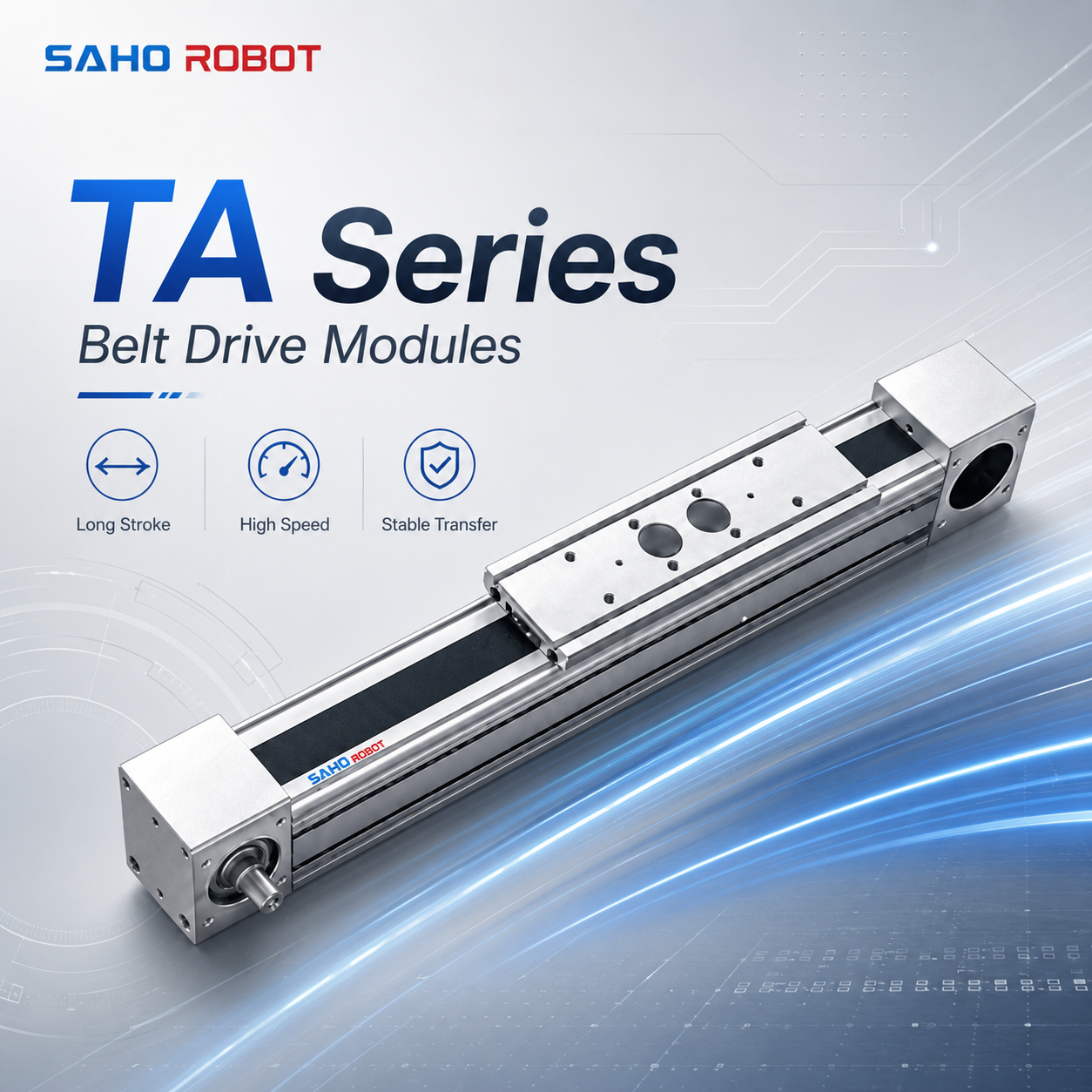 TA Series is suitable for longer stroke, heavier transfer, base-axis movement, and gantry-style X/Y structures. | 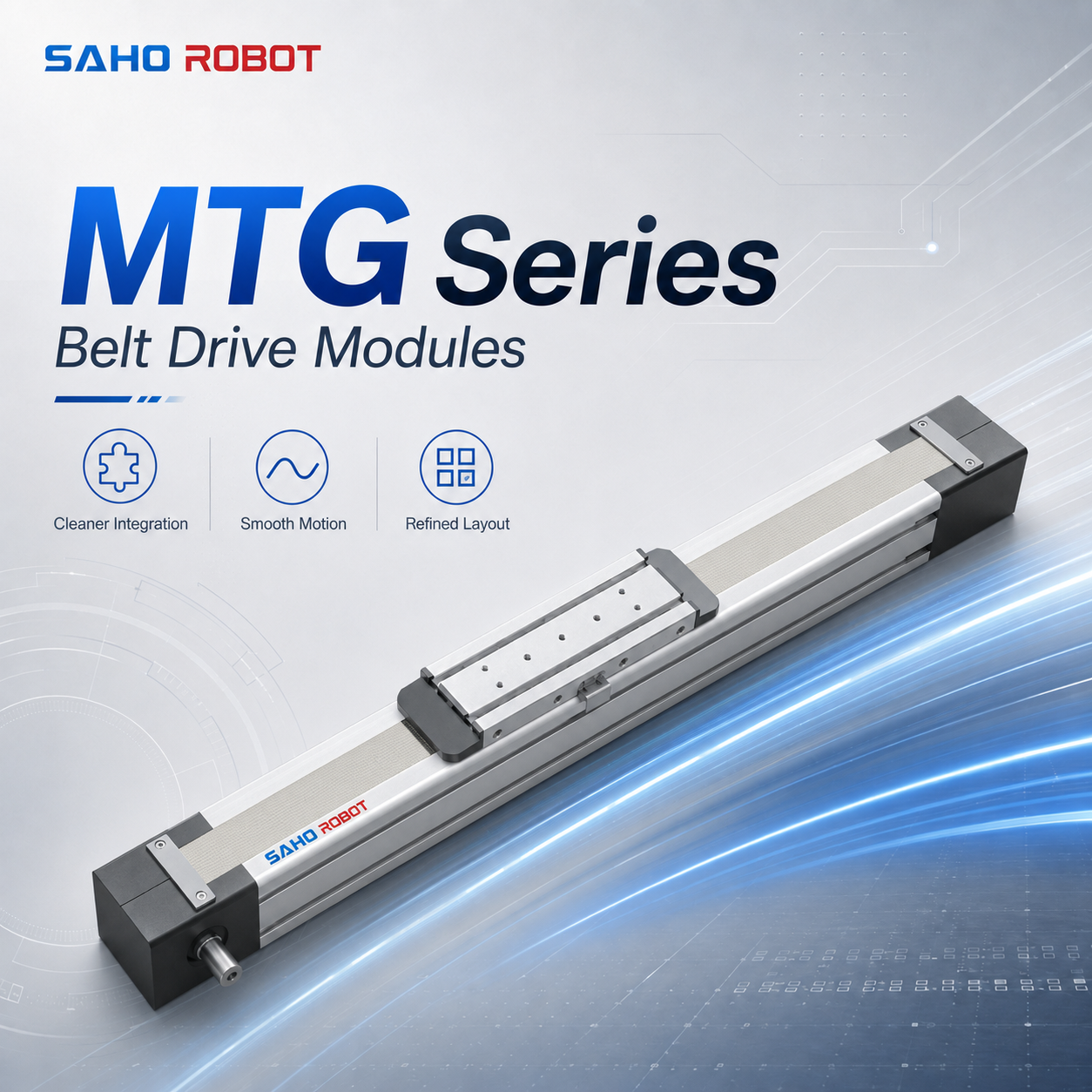 MTG Series is reviewed when X/Y transfer needs cleaner integration, smoother motion, lower noise, or refined layout. |
Where TR Still Fits in a Compact Belt-Driven Layout
TR can still be kept as a compact belt-driven reference when the machine needs a smaller footprint, a standardized profile layout, or a simpler belt-module structure. It is useful when compact installation matters and the motion is mainly transfer-based.
TR should remain a compact belt-drive reference rather than the main selection path for standard multi-axis structures. For most X/Y/Z module planning, TA, MTG, SDM, and SDH should be reviewed first according to stroke, load, installation direction, and working environment.
A TR belt direction can still work with screw-driven modules in compact XY or XYZ structures. For example, a compact belt direction can handle station-to-station transfer, while an SDM or SDH screw direction handles short positioning or vertical movement.
SDM vs SDH: How to Choose for Z Axis and Local Positioning
SDM and SDH are both important for screw-driven directions, but their roles should be explained clearly. SDM is reviewed when the axis needs general ball screw positioning, thrust support, stable local motion, inspection positioning, dispensing motion, probe movement, height adjustment, or short-stroke process control.
SDH is reviewed when the Z axis needs a compact built-in screw structure, guided support, and short-stroke vertical movement. It is especially useful when installation space is limited and the vertical stroke is within about 1000 mm. In this type of structure, the priority is not only positioning accuracy but also holding stability, vertical load support, and reliable guided motion.
For a standard Z axis, SDM is a strong first review when the design allows a general screw module and the working load needs stable positioning. SDH becomes more relevant when the equipment needs a compact integrated Z-axis module. In both cases, the final selection must confirm payload, stroke, speed, screw lead, motor layout, brake requirement, mounting direction, and safety logic.
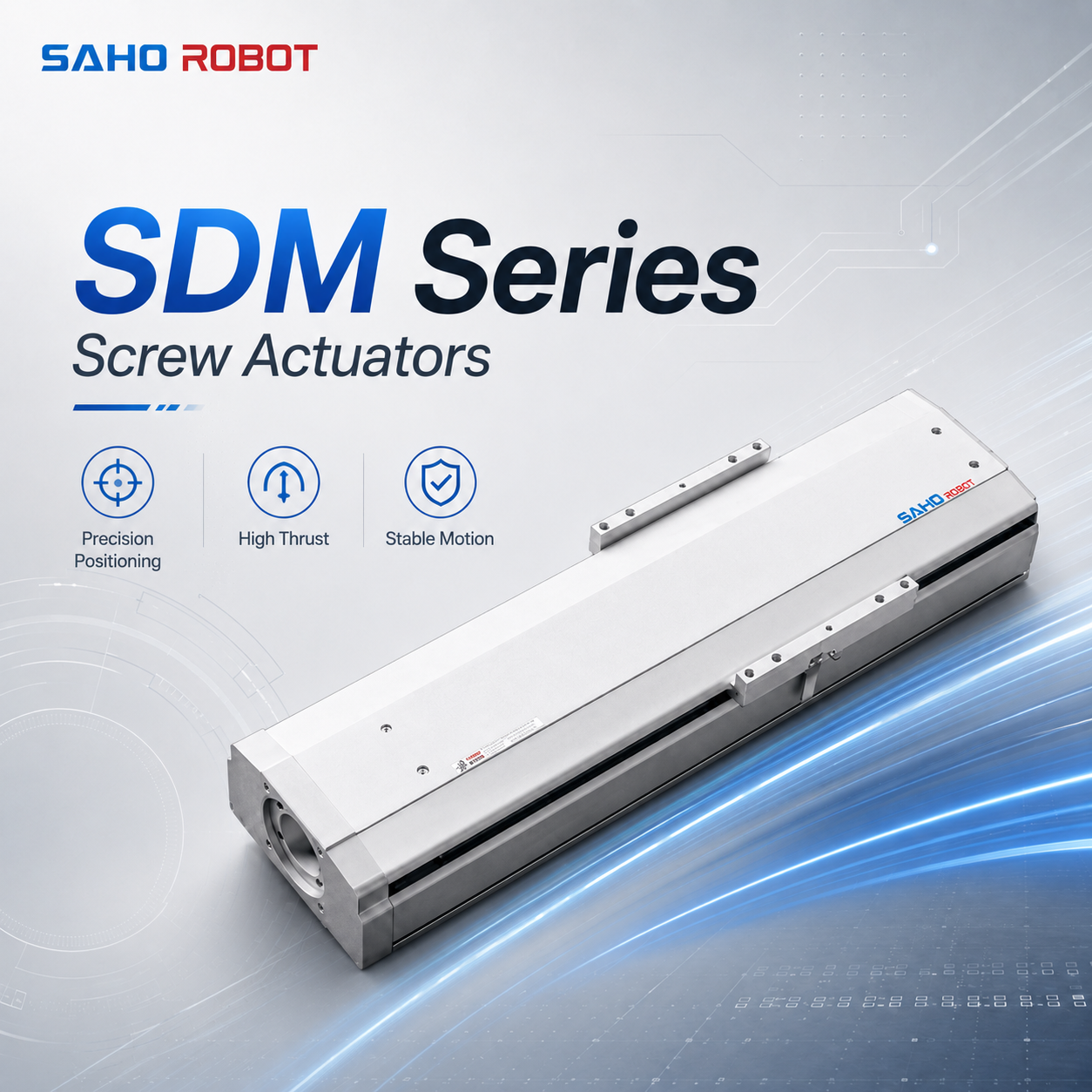 SDM Series fits general screw-driven positioning, thrust support, local tooling, inspection, and Z-axis support. | 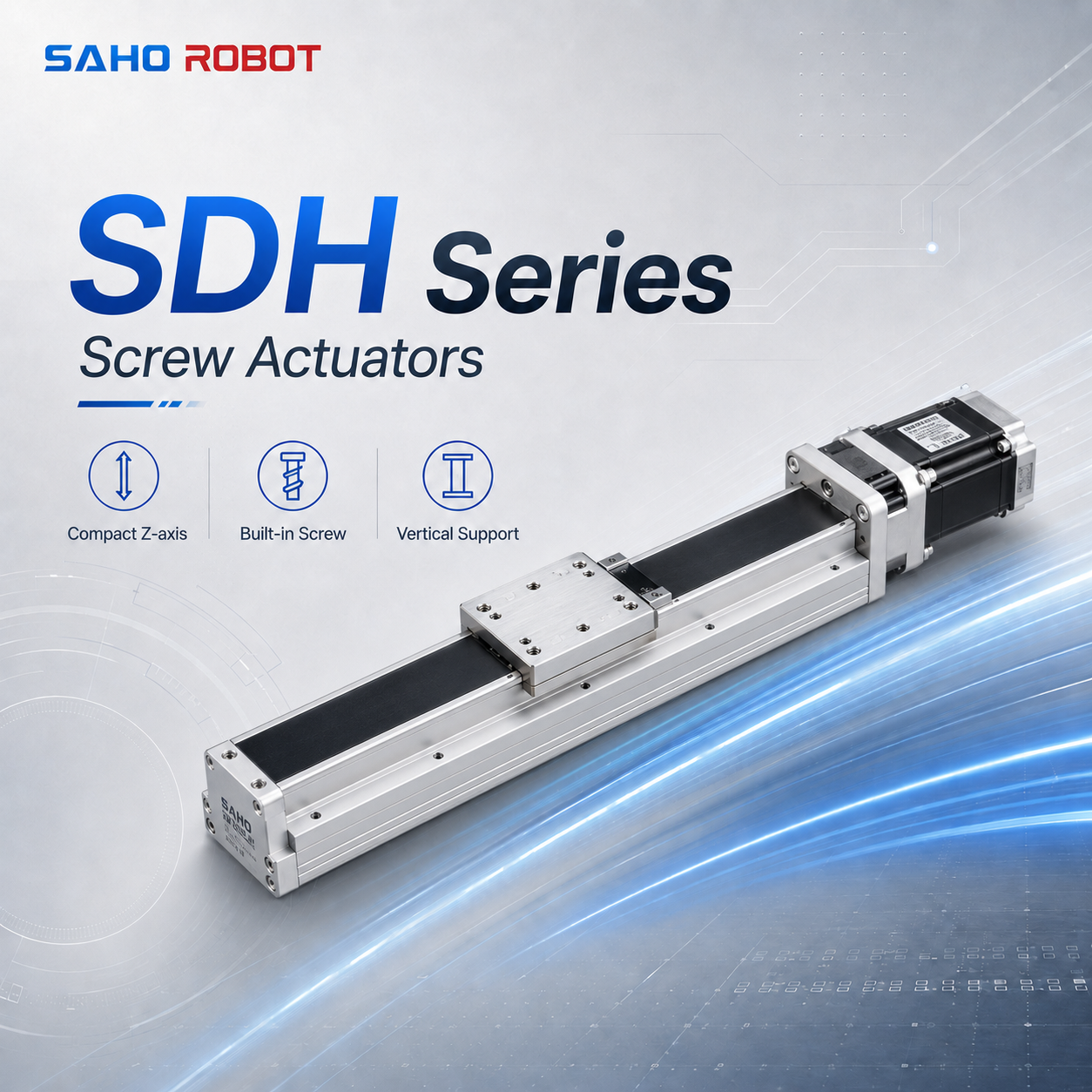 SDH Series fits compact Z-axis lifting, built-in screw structure, guided support, and short-stroke vertical movement. |
Speed, Thrust, Repeatability, and Moving Mass
Speed and thrust often point to different module choices. A belt-driven module usually supports faster travel over a longer stroke. A screw-driven module usually supports stronger thrust and more stable positioning over a shorter travel range. The selection process should separate transfer motion from process motion.
Moving mass is especially important in multi-axis structures. If the X axis carries the Y axis, Z axis, gripper, camera, sensor bracket, cable chain, and tooling plate, the load is not only the product weight. The full moving stack should be calculated before the base module, motor power, acceleration, and frame support are selected.
Repeatability should also be defined by direction. A long transfer direction may only need to reach a loading window. A tool direction may need to return to the same point under load many times. A Z axis may need to hold position safely after stopping. This difference is why one machine can use both belt and screw modules without being inconsistent.
| Design Question | Recommended Check | Likely Direction |
| Is the stroke long? | Confirm travel length, return time, frame support, cable path, and acceleration. | TA or MTG belt module is often preferred. |
| Is the base axis carrying other axes? | Calculate full moving mass, offset load, gantry stiffness, and drag chain weight. | TA or a suitable belt-driven base structure should be reviewed carefully. |
| Is the stop point critical? | Confirm repeatability, load condition, tool offset, and process tolerance. | SDM screw module is often preferred. |
| Is there vertical load? | Confirm load weight, brake needs, holding force, safe stop, and vertical stroke. | SDM or SDH is often reviewed first. |
| Is direct force output required? | Confirm force value, stroke, duty cycle, and control method. | SEH or a dedicated electric actuator solution should be reviewed separately. |
Higher-Requirement Series: MSDM, MSTM, JTS, and JTG
Higher-requirement series should not replace the standard selection path. They should be mentioned only when the project has higher rigidity, stronger structure, better protection, dust resistance, enclosed motion, or special environment requirements. This keeps the selection path clear and prevents every series from looking like a standard option for every axis.
MSDM or MSTM may be reviewed when the structure needs more rigidity, higher load support, stronger guide support, or a more demanding multi-axis frame. These series should be described as upgrade or higher-requirement directions, not as the default choice for normal X/Y/Z movement.
JTS and JTG can be reviewed when the working environment needs better protection. If the machine faces dust, particles, welding dust, splash risk, or enclosed structure requirements, these protected directions may become relevant. For standard clean and open structures, TA, MTG, SDM, and SDH should remain the main explanation path.
| Series Direction | Use It When | Selection Position |
| MSDM / MSTM | The project needs higher rigidity, higher load support, stronger structure, or more demanding integration. | Use as higher-requirement references, not standard X/Y/Z choices. |
| JTS | The screw-driven axis needs better protection in dusty or particle-prone environments. | Use as an enclosed screw-drive reference for special environments. |
| JTG | The belt-driven axis needs better protection in dusty or demanding transfer environments. | Use as a protected belt-drive reference, not a normal replacement for TA or MTG. |
Why SEH Should Stay as a Special Force Application
Some processes use words such as pressing, pushing, clamping, or insertion, but these words do not always mean the same module requirement. A light tool approach or short positioning movement may be handled by a screw-driven module after sizing. A true force process needs a separate review.
If the process requires direct pressing force, controlled push-pull force, or actuator-style force output, SEH Series or a dedicated electric actuator solution should be reviewed separately. For most standard Z-axis structures, SDM or SDH is more commonly reviewed.
| Force-output note: SEH should remain a special option for push-pull force, pressing force, or actuator-style force output. For most standard Z-axis structures, SDM or SDH is usually reviewed first according to stroke, payload, brake requirement, mounting direction, and safety logic. |
System Layout Planning for Mixed Module Structures
In a gantry layout, the base direction must support every component mounted above it. This may include a cross module, vertical module, gripper, camera, tooling plate, sensor bracket, and drag chain. The base module should be selected after the full moving mass is known.
The cross direction should be selected according to the process. If the direction moves a light tool across several lanes, a belt module may fit. If the direction controls precise inspection, dispensing, focus adjustment, or short local movement, a screw module may provide a more stable result.
Maintenance access should be included before the frame is finalized. Lubrication points, sensor positions, motor side, cable path, drag chain bending radius, and cover removal space all influence long-term service. A compact design is useful only when the module remains accessible after the machine is built.
Control Integration for Belt and Screw Directions
Mechanical selection and control planning should move together. A belt-driven direction and a screw-driven direction may both use servo control, but their tuning behavior can be different. Belt systems may require careful acceleration limits, while screw systems may require attention to thrust, screw lead, brake logic, and vertical holding behavior.
Homing strategy should match the process. A long belt direction may need enough approach distance and overtravel protection. A short screw direction may need a more accurate home sensor or safe height position. Home switches, limit switches, brake signals, servo alarms, and emergency stop behavior should be planned early.
Synchronized motion can add complexity. A gantry may need two base modules moving together. A pick-and-place unit may need blended X-Y-Z motion. A laser or inspection head may need stable speed and smooth approach. The controller should have enough axis capacity, I/O points, safety logic, and tuning flexibility.
Common Multi-Axis Layouts Using Belt and Screw Modules
Several mixed layouts are common in industrial automation. A belt X plus screw Z layout is useful when long travel and vertical positioning work together. A belt X plus belt Y plus screw Z layout can support fast gantry movement with controlled lifting or local tool approach.
A belt X plus screw Y plus screw Z layout can support long transfer with local precision adjustment. This structure is useful when the base direction moves quickly, but the tool position needs fine control at each station.
| Layout | Typical Series Direction | Suitable Use | Design Focus |
| Belt X + Screw Z | TA or MTG + SDM or SDH | Long transfer with vertical tooling or lifting. | Moving mass, brake method, vertical load, Z stroke, and cable path. |
| Belt X + Belt Y + Screw Z | TA / MTG + TA / MTG + SDM / SDH | Fast gantry, handling, loading, and pick-and-place movement. | Vibration, cable path, beam stiffness, X/Y synchronization, and Z payload. |
| Belt X + Screw Y + Screw Z | TA or MTG + SDM + SDM or SDH | Long transfer with local precision alignment. | Stop accuracy, station repeatability, local process control, and moving mass. |
| Protected or higher-requirement layout | JTG or JTS as reference | Dust, particles, welding, or protected production environments. | Protection level, maintenance, environment, cover structure, and lifetime requirements. |
Application Scenarios with Typical Module Combinations
Lithium Battery Equipment
In lithium battery equipment, long transfer and local precision often appear in the same line. A common layout may use TA or MTG for tray transfer, SDM for inspection positioning or test-probe movement, and SDH for compact Z-axis lifting. This keeps the transfer direction fast while giving the vertical or local working direction better support.
Battery equipment often runs long production cycles, so stable operation matters. Duty cycle, guide support, cable routing, load distribution, vertical brake logic, and maintenance intervals should be reviewed before the final combination is confirmed.
LCD Panel and Display Handling
LCD panel handling often needs long, smooth travel plus accurate local positioning. MTG can be reviewed for clean and smoother X/Y movement, while SDM can control camera position, inspection distance, or fine adjustment. If the vertical stroke is compact, SDH can be reviewed for Z-axis lifting or height control.
Sudden vibration can affect product safety and inspection quality. Speed should be balanced with rigidity, guide support, mounting quality, and motion profile control instead of being treated as the only target.
Electronic Component Assembly
Electronic component assembly may include feeding, inspection, dispensing, pressing-related positioning, and pick-and-place motion. A typical structure may use MTG or TA for X/Y transfer, SDM for camera, probe, or dispensing positioning, and SDH for compact vertical movement in limited equipment space.
Space is often limited in compact electronic equipment. The design should separate transfer motion from process motion. The horizontal transfer axis should not be overdesigned, and the local working axis should not be underdesigned.
Laser Processing and Inspection Equipment
Laser and inspection equipment often needs long travel plus fine positioning. TA or MTG can move the working head or fixture across a larger area. SDM can control focus height, inspection distance, or short-stroke adjustment. SDH can be reviewed when the Z-axis structure needs compact built-in support.
Camera results, laser focus, and measuring repeatability can suffer if the module or frame vibrates. Local precision directions should be selected with rigidity, moment load, screw support, and mounting quality in mind.
Packaging, Sorting, and Transfer Lines
Packaging and sorting lines often value cycle time and stable transfer. TA can handle long-stroke product or tray movement, MTG can be reviewed when smoother motion or cleaner structure matters, and SDM or SDH can adjust stops, guides, lifting units, or local working heads.
Mixed drive selection prevents unnecessary over-design. The fast transfer direction stays efficient, while the local adjustment direction gains better positioning control. The machine can remain practical, serviceable, and easier to tune.
Selection Data to Prepare Before Inquiry
Each direction should have its own motion sheet before model selection. Stroke, load, moving mass, speed, acceleration, repeatability, and installation direction should be listed separately for X, Y, and Z. One shared value for the whole machine is usually not enough.
The inquiry should also describe what the module carries. A centered load is easier to support than an offset gripper. A light camera is different from a local tool with contact force. Cable-heavy tooling can add drag force, especially during fast reversal or long travel.
Installation direction should be stated clearly. Horizontal, vertical, side-mounted, and inverted installation create different load and safety conditions. For vertical use, brake motor planning or mechanical lock planning may be needed.
| Data Item | What to Prepare | Why It Matters |
| Axis role | X, Y, or Z; transfer, alignment, lifting, positioning, or local tool motion. | Prevents using one drive type for every direction without checking the real job. |
| Stroke | Useful travel, safety margin, end clearance, and whether Z stroke is within about 1000 mm. | Separates long transfer axes from short local positioning and compact vertical axes. |
| Load | Payload, tooling weight, fixture weight, next-axis weight, offset load, and cable drag. | Affects guide load, torque, screw thrust, belt tension, and motor matching. |
| Speed | Maximum speed, acceleration, deceleration, cycle time, and return movement. | Helps decide whether belt transfer or screw positioning is more practical. |
| Accuracy | Repeatability target for each motion direction and each working station. | Prevents over-designing transfer motion or under-designing tooling motion. |
| Installation | Horizontal, vertical, side-mounted, inverted mounting, motor side, and brake requirement. | Changes load direction, brake needs, safety logic, and service access. |
| Environment | Clean-room, dust, particles, welding dust, oil, splash, temperature, and maintenance access. | Shows whether TA/MTG/SDM/SDH are enough or JTS/JTG should be reviewed as references. |
FAQ
Is this guide about one actuator model or a multi-axis structure?
This guide focuses on multi-axis linear module structures. The key point is how different axes use different drive types according to stroke, speed, precision, load, installation direction, and working process.
When should TA be selected instead of MTG?
TA is usually reviewed when the X/Y axis needs longer stroke, heavier transfer, stronger base movement, or gantry-style support. MTG is reviewed when cleaner integration, smoother motion, lower noise, or a more refined multi-axis layout is important.
When should SDH be selected instead of SDM?
SDM is reviewed for general screw-driven positioning, thrust support, and stable local motion. SDH is reviewed when the Z axis needs compact built-in screw structure, guided support, and short-stroke vertical movement, especially when the stroke is within about 1000 mm.
Should SEH be recommended as the main Z-axis solution?
No. SEH should only be mentioned as a special case for push-pull or pressing-force applications. For most standard multi-axis Z-axis structures, SDM or SDH is more commonly reviewed.
When should higher-requirement series such as MSDM, MSTM, JTS, or JTG be mentioned?
They should be mentioned when the project needs higher rigidity, stronger structure, dust protection, enclosed design, or more demanding environment compatibility. They should be treated as reference directions, not as the default recommendation for every standard system.
What project data helps SAHO recommend the right module combination?
Useful project data includes machine sketch, X/Y/Z axis role, stroke, load, moving mass, speed, acceleration, repeatability, installation direction, duty cycle, working environment, motor requirements, tool offset, cable drag, brake requirement, and whether the process needs position control or force output.
Conclusion: Build the Motion Layout Around the Real Process
Mixed belt and screw module systems work best when each direction has a clear purpose. Belt-driven modules support long-stroke movement, fast transfer, and practical gantry travel. Screw-driven modules support stable positioning, higher thrust, vertical movement, and accurate local process control.
For a reliable multi-axis linear module structure, the motion plan should start from process role rather than product name alone. Define which direction needs speed, which direction needs repeatability, which direction needs thrust, which direction carries other modules, and which environment requires higher protection before final model confirmation.
Use TA when the X/Y axis needs longer stroke, heavier transfer, stronger base movement, or gantry-style support.
Use MTG when cleaner integration, smoother motion, lower noise, or refined multi-axis layout matters.
Use SDM for general screw-driven positioning, thrust support, inspection positioning, and stable local motion.
Use SDH for compact Z-axis lifting, guided support, and short-stroke vertical movement, especially within about 1000 mm.
Use MSDM, MSTM, JTS, and JTG only as higher-requirement references.
Keep SEH only for special push-pull or pressing-force applications.
Contact SAHO for Multi-Axis Module SelectionSend SAHO the machine sketch, X/Y/Z motion layout, stroke, moving load, speed, repeatability, mounting direction, vertical load, environment, and force requirement if applicable. SAHO can review whether TA, MTG, SDM, SDH, or a higher-requirement reference series fits the real automation layout. |







-
-
 English
 -
 Français
 -
 Deutschland
 -
 Italia
 -
 Polska
 -
 España
 -
 Русский язык
 -
 日語
日語 -
 한국
한국 -
 Türkiye
 -
 português
 -
 بالعربيةês
 -
 Tiếng Việt
 -
 คนไทย
คนไทย -
 简体中文
简体中文 -
繁體中文
-