

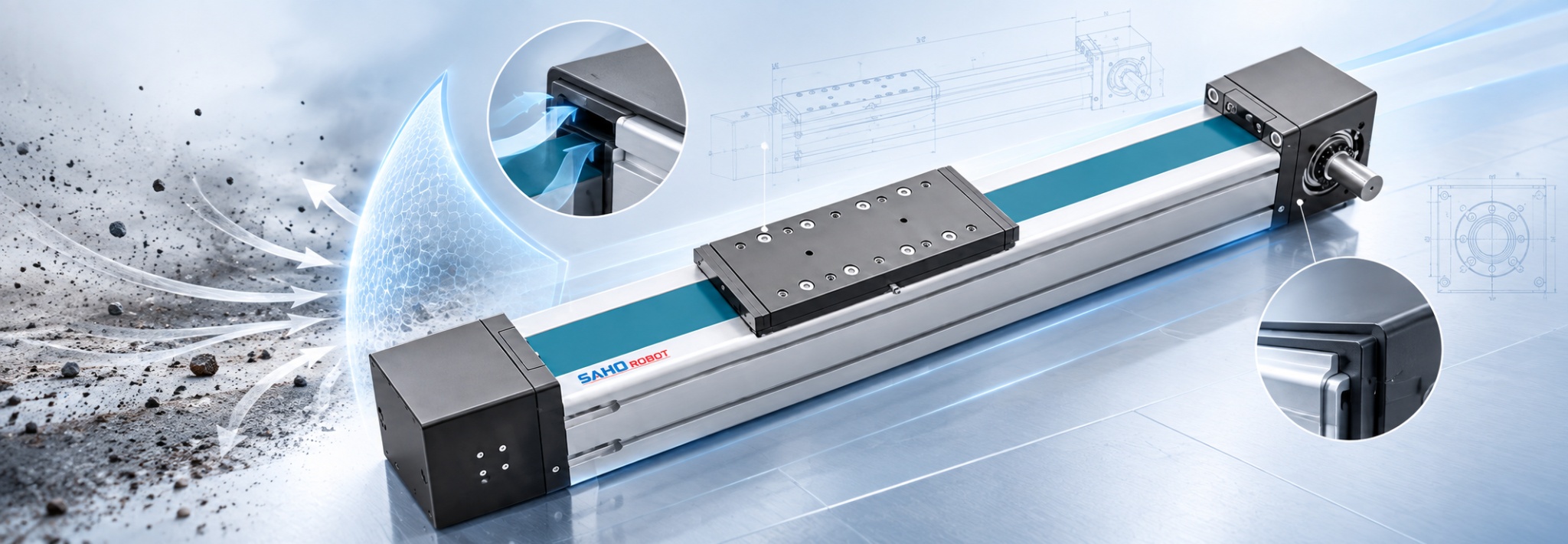
A dustproof belt driven actuator is not created simply by rotating an actuator or turning a cover away from the process. Installation orientation changes how gravity, airborne dust, falling debris, and process-generated particles approach possible ingress paths. The practical engineering task is to map the contamination source against the cover opening direction, mechanical seal interfaces, cable outlet, mounting face, and surrounding guards. A better orientation may reduce direct exposure, but it does not establish an automatic protection rating. For a JTG installation, any required sealing level, approved mounting direction, or environmental performance must be checked against verified drawings and application data.
Engineering rule: treat cover orientation as an exposure-control decision. First identify where contamination comes from, then determine whether gravity and process airflow carry it toward or away from each opening and mechanical sealing interface.
Map Falling, Airborne, and Process-Generated Contamination Paths
The most useful starting point for belt driven actuator contamination control is the contamination path rather than the actuator label. Two similar axis layouts can experience very different exposure when one sits below a hopper and another sits beside a dusty transfer station.
Falling debris follows gravity. Powder, chips, fibers, or fragments dropping from a process tend to reach upward-facing covers, ledges, carriage transitions, and recesses first. Even when material does not immediately enter an opening, accumulated deposits can migrate later as the carriage moves, the machine vibrates, or maintenance disturbs them.
Airborne dust can circulate around the actuator from several directions. Fans, extraction systems, enclosure airflow, and compressed-air cleaning may change the dominant path. Rotating a cover away from vertical fallout can therefore reduce one exposure route while leaving a side-facing interface exposed.
Process-generated contamination may arrive with its own momentum. Cutting chips, abrasive residue, packaging dust, or particles from an adjacent mechanism can travel horizontally or upward. To identify dust entry paths in a belt driven linear actuator, record both the gravity path and any process-driven path.
| Contamination source | Path to record | What to inspect |
|---|---|---|
| Falling dust or debris | Top-down path controlled mainly by gravity. | Upward-facing openings, cover transitions, ledges, lower collection areas, and guards that may redirect falling material. |
| Airborne dust | Recirculating or changing path influenced by local airflow. | Side openings, cable exits, seal interfaces, fans, extraction flow, enclosure ventilation, and cleaning practices. |
| Process-generated particles | Directional path created by the process rather than gravity alone. | Direct line of sight to the actuator, moving tooling, nearby deflectors, and locations where particles can rebound. |
If the machine is already being developed around a protected belt axis, compare this contamination map with the available JTG belt driven linear actuator direction before the surrounding frame and guards are fixed. At this stage, the objective is not to assume a protection level; it is to avoid unnecessarily placing a possible ingress path directly in the contamination stream.
Review the Cover Opening, Seal Interfaces, and Cable Exits
A protective cover can interrupt a direct contamination path, but it should not be treated as a hermetic boundary unless verified documentation says otherwise. Review every transition between a fixed cover and a moving component, every end transition, and every route by which cables or other services leave the protected area.
Check the opening direction before fixing the mounting orientation
The linear actuator cover orientation matters because gravity can either help material fall away from an interface or encourage deposits to remain against it. An opening facing a falling contamination source can receive particles directly. Turning that interface sideways or downward may reduce direct fallout, but it can expose another area such as an end transition, underside opening, mounting face, or cable outlet.
This is the core of how cover orientation affects a belt actuator: orientation changes the exposure route rather than creating a new sealing classification. Review the complete protective interface, not only the surface that appears most exposed in the general arrangement drawing.
Inspect the mechanical sealing interface as an interface, not a label
Where a selected configuration uses a seal lip, wiper, overlapping edge, or another mechanical sealing interface, inspect whether that interface remains continuous and unobstructed. Damage, lifting, misalignment, or packed debris can create a local ingress path. The exact construction of the JTG protective cover and any acceptable inspection or replacement procedure must come from verified product documentation. If that evidence is not available for the selected configuration, engineering confirmation is required.
Cable outlets deserve the same attention. Dust can accumulate on a cable loop, follow the cable toward an entry area, or collect around a bracket or strain-relief point. Record the outlet direction, moving cable route, nearby ledges, and whether cleaning can drive contamination toward the opening.
Compare Horizontal, Vertical, and Inverted Installation Questions
There is no universal “cleanest” orientation. Horizontal, vertical, and inverted mounting change where material settles and which interfaces remain exposed. The useful question is where contamination will travel during actual production and after repeated machine cycles.
| Installation | Exposure question | Review before release |
|---|---|---|
| Horizontal | Will dust settle on the upper cover, carriage transition, or an upward-facing opening? | Check whether the opening sheds material or creates a collection area beside a moving interface. |
| Vertical | Where will falling material accumulate after travelling along the axis? | Review lower-end transitions, brackets, cable routing, and whether deposits can be removed without pushing them inward. |
| Inverted | Does inversion move the primary opening away from fallout, or expose another underside interface? | Confirm the proposed mounting direction for the selected actuator and review cable exits, mounting faces, and newly exposed interfaces. Engineering confirmation required. |
A horizontal actuator directly beneath falling debris can experience more contamination than an inverted axis outside the debris path. Conversely, inversion may move a cable outlet or cover interface into a more exposed position. Orientation therefore has to be evaluated as part of the complete machine arrangement.
If axis placement is still being developed, the related guide on belt actuator layouts for transfer systems provides additional context for integrating the axis into the wider machine structure.
Add External Guarding Without Losing Inspection Access
When the process continuously produces dust, chips, or falling debris, changing actuator orientation may not remove enough exposure. A machine-level guard, hood, deflector, or enclosure can interrupt the dominant contamination path before material reaches the actuator.
The guard also needs somewhere to send the intercepted material. A plate above the axis can stop direct fallout yet create a ledge that stores debris. Vibration or cleaning may later dump that material onto the cover. A better arrangement diverts contamination to a location where it can be removed without crossing an actuator opening.
Do not sacrifice service access. Maintenance personnel should be able to see relevant cover edges, mechanical seal interfaces, cable outlets, and natural collection points. If guarding hides these areas, damaged interfaces or packed debris may go unnoticed.
Do not assume a purge function. If positive-pressure air or another purge method is proposed, its connection, pressure, flow path, exhaust path, and compatibility with the selected actuator require verified application data and engineering confirmation. Uncontrolled compressed-air cleaning can also redistribute fine dust toward openings.
Create an Orientation and Contamination Inspection Record
Before attempting to install a belt actuator in a dusty environment, document the real contamination conditions rather than using a general description such as “dusty.” The record below is useful for design review, commissioning, and later belt actuator seal inspection.
| Orientation and contamination handoff record | |
| Contaminant and source | Record the material type and mark its physical source relative to the actuator. |
| Dominant direction | Record top-down, side-on, upward, recirculating, or mixed exposure, including relevant process airflow. |
| Actuator and opening orientation | Show the installed pose and the direction of relevant cover openings or moving interfaces. |
| Seal condition | Look for visible damage, lifting, abnormal gaps, packed debris, or changes at accessible mechanical sealing interfaces. |
| Cable route | Record outlet direction, loops, brackets, moving cable paths, and potential dust-collection ledges. |
| Guarding and cleaning | Show what intercepts contamination, where debris is redirected, and whether cleaning can force it toward an opening. |
| Inspection access | Confirm that expected collection points, cover transitions, cable exits, and seal interfaces remain accessible. |
Useful handoff method: attach a marked-up machine layout or photograph showing the contamination source and arrows for the dominant particle path. This gives an engineering reviewer more useful information than a requirement that only says “dusty environment.”
Confirm the JTG Installation Against Verified Drawings and Application Data
Once the contamination path and proposed mounting orientation are documented, compare them with the latest verified information for the selected JTG configuration. The review should show the contamination source, dominant direction, actuator pose, cover opening relationship, accessible mechanical sealing interfaces, cable outlet, external guarding, and planned inspection method.
At this stage, it is appropriate to review the available belt driven actuator options. Do not select a configuration from the appearance of its cover alone. If the project requires a defined protection level, a specific inverted mounting arrangement, purge provision, or documented sealing performance that is not available in verified data, record engineering confirmation required.
Continue with a JTG product review when the machine architecture already points toward a belt-driven axis and the contamination problem can be described in terms of source direction, opening orientation, guarding, and inspection access. Do not use this article alone to determine the final model or environmental suitability.
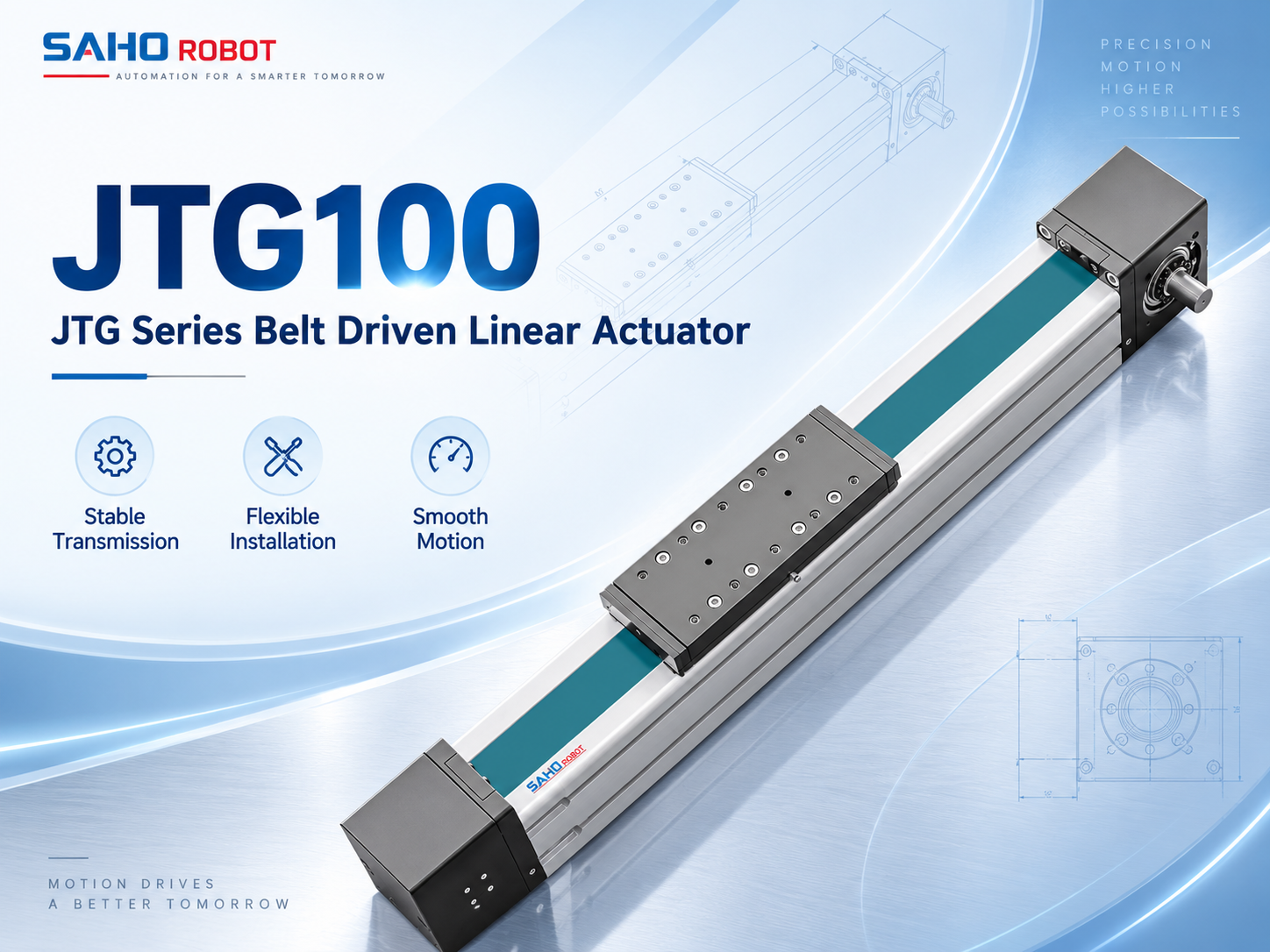 JTG Series Belt Driven Linear Actuator Review the JTG Series after the machine contamination path and installation orientation have been defined. The image shows a JTG100 as a representative JTG Series product; final model, mounting arrangement, cover interface, and required environmental performance should be confirmed from the application data. View JTG Series |
Before requesting a configuration, confirm these three decisions
Motion architecture: confirm that the application already calls for a belt-driven axis; this article does not replace load, stroke, speed, or motion sizing.
Contamination strategy: show whether orientation and external guarding keep the dominant dust or debris path away from the most exposed interfaces.
Protection requirement: state any required sealing or environmental performance explicitly. If the requirement cannot be verified against product documentation, engineering confirmation is required before selection.
Prepare for engineering review: proposed JTG configuration, machine layout, installation orientation, contamination type, source location, dominant contamination direction, cover opening relationship, cable routing, proposed guarding, cleaning method, inspection access, and any required environmental or sealing condition.
Common Questions About Dust Seals and Cover Orientation
| Does changing cover orientation make an actuator dustproof? |
| No. Orientation can reduce direct exposure to some contamination paths, but it does not create or prove an ingress-protection rating. The result still depends on openings, mechanical sealing interfaces, cable exits, guarding, contamination direction, and verified product construction. |
| Which contamination direction should be recorded? |
| Record the dominant direction at the actuator: top-down fallout, side-on debris, upward discharge, recirculating airborne dust, or mixed exposure. If direction changes during operation, document the condition that produces the most relevant exposure path. |
| Can an actuator be installed inverted? |
| Inversion may reduce fallout on some surfaces but can expose different openings, cable exits, or mounting interfaces. The proposed JTG mounting direction should be confirmed for the selected configuration rather than inferred from contamination logic alone. |
| What should SAHO review before a JTG is used near dust or debris? |
| Provide the proposed JTG configuration, installed orientation, contamination type and source, dominant direction, cover opening relationship, cable routing, external guards, cleaning method, inspection access, and any required environmental or sealing condition that needs engineering confirmation. |
Take the Contamination Map Into the JTG Engineering Review
A dustproof belt driven actuator should be treated as an application objective rather than an automatic result of changing cover orientation. Orientation can reduce direct exposure, guarding can intercept debris, and accessible mechanical interfaces make inspection easier, but documented product confirmation is still required wherever the machine has a defined environmental protection requirement.
Ready for the next engineering step? Review the JTG Series for the relevant product direction, then send the proposed orientation together with the machine layout, contamination source and direction, cable routing, guarding concept, cleaning method, inspection access, and any required environmental condition. Review JTG Series Belt Driven Linear Actuator Contact SAHO for Engineering Review |