

Date:2026-07-16 Click:3981
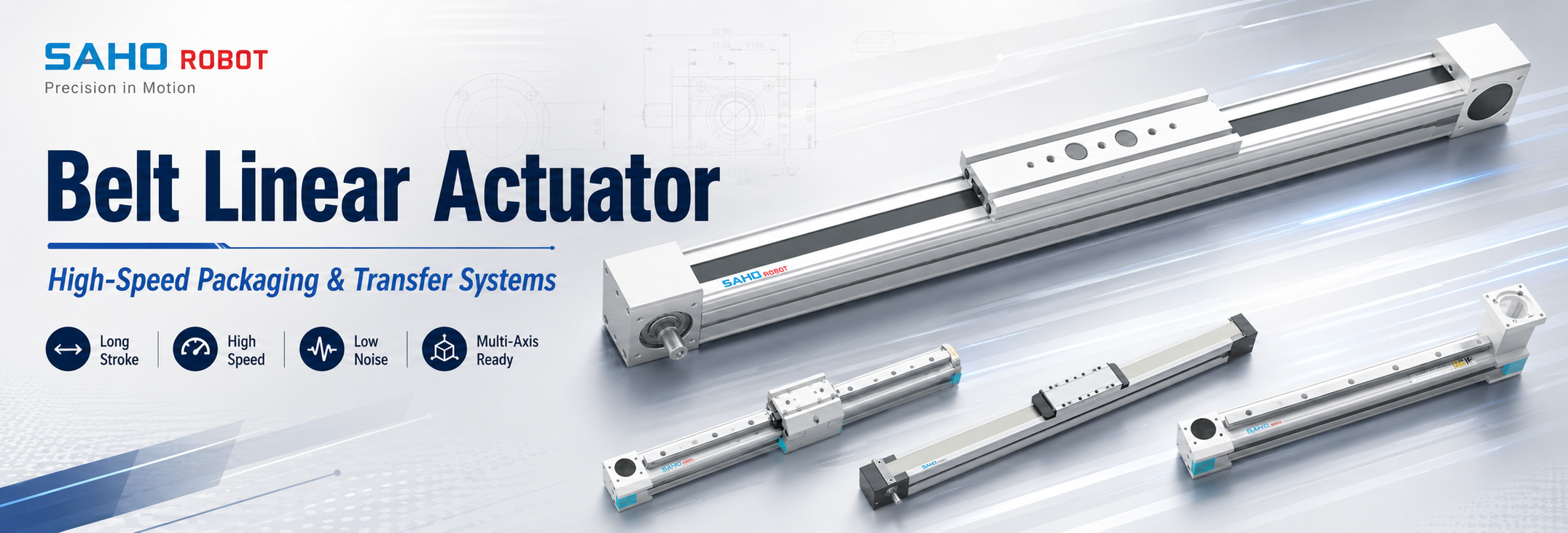
A Belt Linear Actuator is often selected for high-speed packaging and transfer systems because it supports long-stroke motion, fast cycle movement, and stable repeated positioning. In packaging equipment, the axis may move cartons, trays, pouches, bottles, labels, guide rails, cameras, or lightweight tooling between process stations. The best selection starts with real application data: stroke, load, speed, accuracy, installation direction, duty cycle, tooling layout, and working environment.
Packaging lines need more than simple straight movement. A useful linear axis must accelerate smoothly, stop repeatably, reduce vibration, and work with conveyors, sensors, servo systems, and machine frames. Belt-drive linear modules are especially useful in long-stroke transfer, product spacing, multi-lane sorting, gantry handling, inspection positioning, and cleaner production transfer.
This guide focuses on SAHO belt-drive linear module selection for packaging and transfer applications. It connects application needs with TA Series, TR Series, and MTG Series. The article only discusses belt-drive linear modules, not direct-drive linear motor products.
Why Packaging Lines Use Belt-Drive Linear Modules
Packaging equipment often needs long movement with short cycle time. A product may enter from one conveyor, move to a second lane, pass through a label station, and continue to a tray or carton loading area. The transfer axis must move quickly while keeping the product path stable.
A timing belt structure is useful for this kind of motion. The belt transfers rotary motor power into linear movement, while the carriage runs along a guide structure. This allows the module to cover longer travel distances without making the machine layout too complex.
Packaging systems often work with lightweight or medium-weight items, such as cartons, trays, bottles, bags, pouches, labels, caps, small boxes, and grouped products. Fast travel and smooth return motion can improve line balance and reduce idle time.
Speed alone is not enough. A packaging axis must also control acceleration, reduce vibration, protect product position, and keep noise at an acceptable level. For wider automation background, the Association for Advancing Automation provides industry-level context on automation, motion control, robotics, and industrial integration.
Key Benefits for High-Speed Packaging and Transfer
Long-Stroke Motion for Product Transfer
In many packaging systems, the working distance is longer than the visible process area. An axis may need pickup clearance, release clearance, sensor confirmation distance, and safe deceleration space. Actual stroke planning should include the full motion path, not only the visible product travel.
A belt-drive module supports long-stroke transfer with a clear mechanical structure. It can move a carriage along a long aluminum profile while maintaining a relatively simple drive layout. The long axis can also be combined with side guides, push plates, suction tooling, or cross-axis modules.
This benefit is useful in conveyor-to-conveyor transfer, multi-lane distribution, tray handling, and carton grouping. When the product path is long and the payload is moderate, a belt-driven axis often becomes a practical starting point.
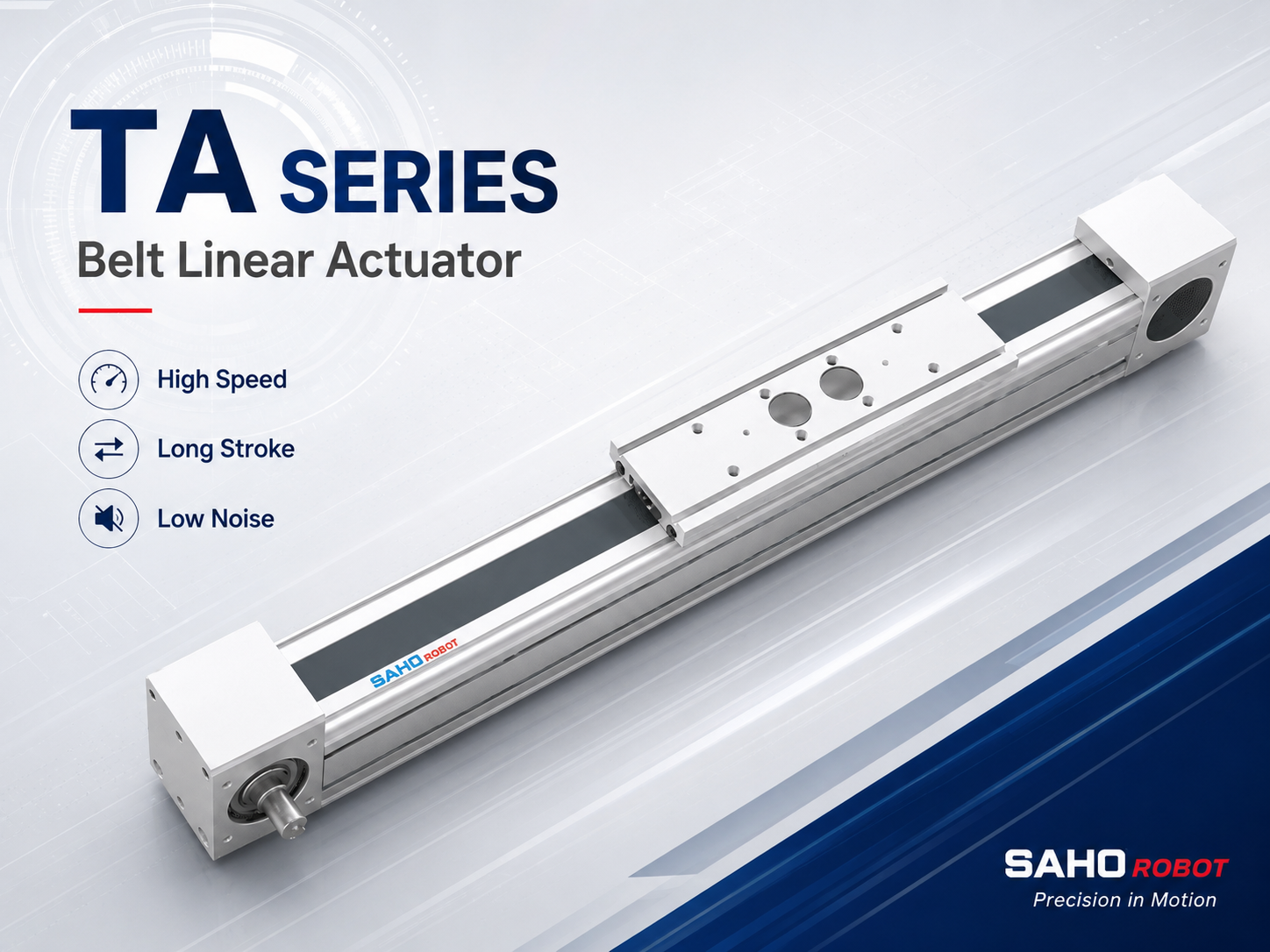
TA Series supports long-stroke transfer, quiet repeated motion, and packaging line movement.
Fast Cycle Movement With Smooth Acceleration
Packaging equipment usually runs with repeated short cycles. The axis may move forward, stop, complete a transfer, return, and wait for the next product. Acceleration and deceleration matter as much as maximum speed.
A suitable belt module can support fast travel while keeping the carriage movement stable. Servo tuning can reduce sudden starts and stops, helping protect cartons, labels, pouches, and trays from shifting during movement.
For best results, the motion sequence should be reviewed before model selection. Stroke, target move time, dwell time, return speed, load mass, and operating hours should be listed together. Otherwise, the selected axis may look correct in size but fail to meet the real cycle target.
Low-Noise Operation for Continuous Production
Packaging lines often operate for long shifts. Noise from repeated motion can affect the working environment and may also signal poor mechanical condition. A properly installed timing belt module can provide smooth and low-noise movement when belt tension, guide condition, and mounting alignment are correct.
Low noise is not only a product feature. It also depends on the machine frame, motor tuning, pulley alignment, guide lubrication, and load balance. The actuator should be installed on a rigid and flat mounting surface.
If sound changes during production, the axis should be checked early. A loose belt, dry guide rail, contaminated track, or uneven mounting surface can increase noise and reduce service life. Preventive maintenance is easier than emergency downtime.
Modular Layout for Multi-Axis Gantry Systems
Many packaging cells need more than one motion direction. A long X axis may carry a shorter Y axis, while a compact Z axis can lift suction tooling or a gripper. This structure supports pick-and-place, multi-lane sorting, tray loading, carton transfer, and inspection positioning.
A belt-drive linear module works well as the long travel axis in this kind of gantry layout. It can cover the main transfer distance while keeping the structure modular. The cross axis can then handle positioning across product lanes.
Gantry design still needs careful alignment. Two parallel axes must move evenly, and the frame must resist twisting during acceleration. Axis selection should be reviewed together with beam stiffness, motor control, cable routing, and tooling weight.
Common Applications in Packaging and Transfer Systems
Conveyor-to-Conveyor Transfer
Conveyor transfer is one of the most common uses. A linear axis can push products from one conveyor to another, separate products into lanes, or move items into a packing position. The axis must match conveyor speed and product spacing.
Tooling often includes a pusher plate, side guide, vacuum head, or compact bracket. The load may look light, yet side force can appear during contact with cartons or trays. Carriage size and guide support should be checked with the tooling layout.
The best setup uses smooth acceleration and controlled stopping. This reduces product sliding, tipping, and carton deformation. It also helps the downstream station receive products in a stable position.
Carton, Case, and Tray Handling
Carton and tray handling often requires long horizontal travel. Grouped products may move into a tray, a filled tray may shift to sealing, or cartons may be pushed into a side lane. In each case, the actuator must provide repeatable placement without excessive vibration.
Cartons and trays may arrive with small spacing differences. A servo-controlled belt axis can adjust motion timing based on sensor signals, helping the machine keep a steady rhythm even when upstream flow changes slightly.
For heavier cartons, the moving mass should include the product, tooling, brackets, cables, and any air tubing. The pusher position may also create moment load, so the load center must be included in the selection data.
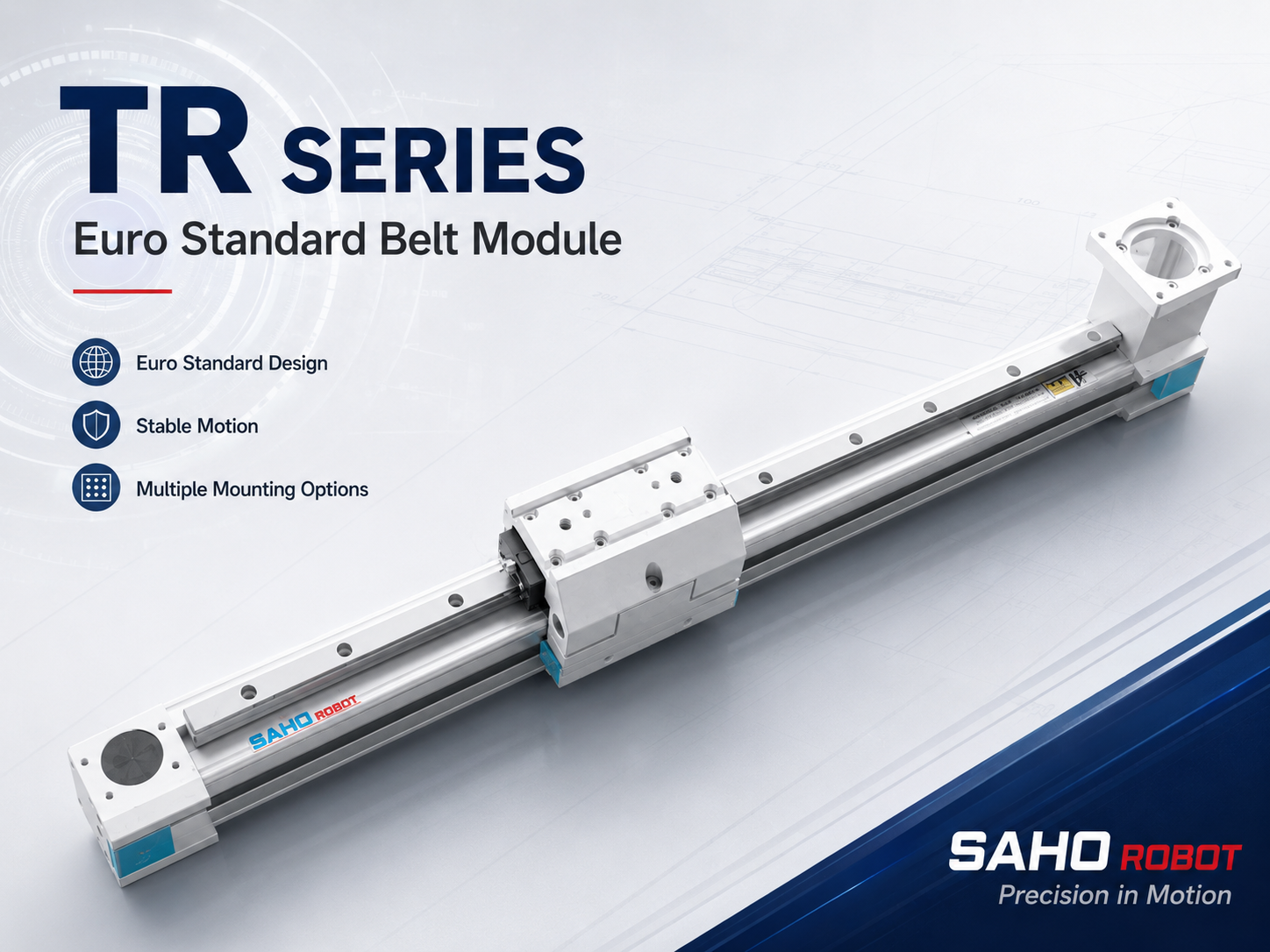
TR Series supports Euro-standard belt module layouts for packaging machine integration and carton or tray handling.
Labeling, Coding, and Inspection Positioning
Labeling and coding stations often need fast width adjustment or stable head positioning. The carried load may be lighter than carton transfer, but stopping stability is important. If the head vibrates after movement, label quality, print position, or scan accuracy can suffer.
Inspection systems may move cameras, lights, scanners, or sensors across product lanes. A belt-driven linear axis can help one inspection station cover several positions. Settling time should be considered when image capture happens immediately after movement.
Cable routing is important in these applications. Camera cables, sensor wires, air tubes, and lighting cables must move safely without pulling on the carriage. Cable carrier space should be planned before the final actuator length is confirmed.
Pick-and-Place and Multi-Lane Sorting
Pick-and-place packaging systems often use multi-axis linear motion. The long axis moves across lanes, while the cross axis positions the tool. A vertical motion component may lift or lower the gripper. This layout is common in tray loading, pouch handling, product grouping, and sorting systems.
The long horizontal axis usually needs speed and travel distance. The shorter axes may need compact size and controlled stopping. The whole gantry must remain stiff enough to avoid shaking during fast movement.
When the system uses suction tooling, the moving load includes cups, manifolds, brackets, hoses, and fittings. The full tooling assembly should be included in the load calculation to avoid undersizing the carriage or motor package.
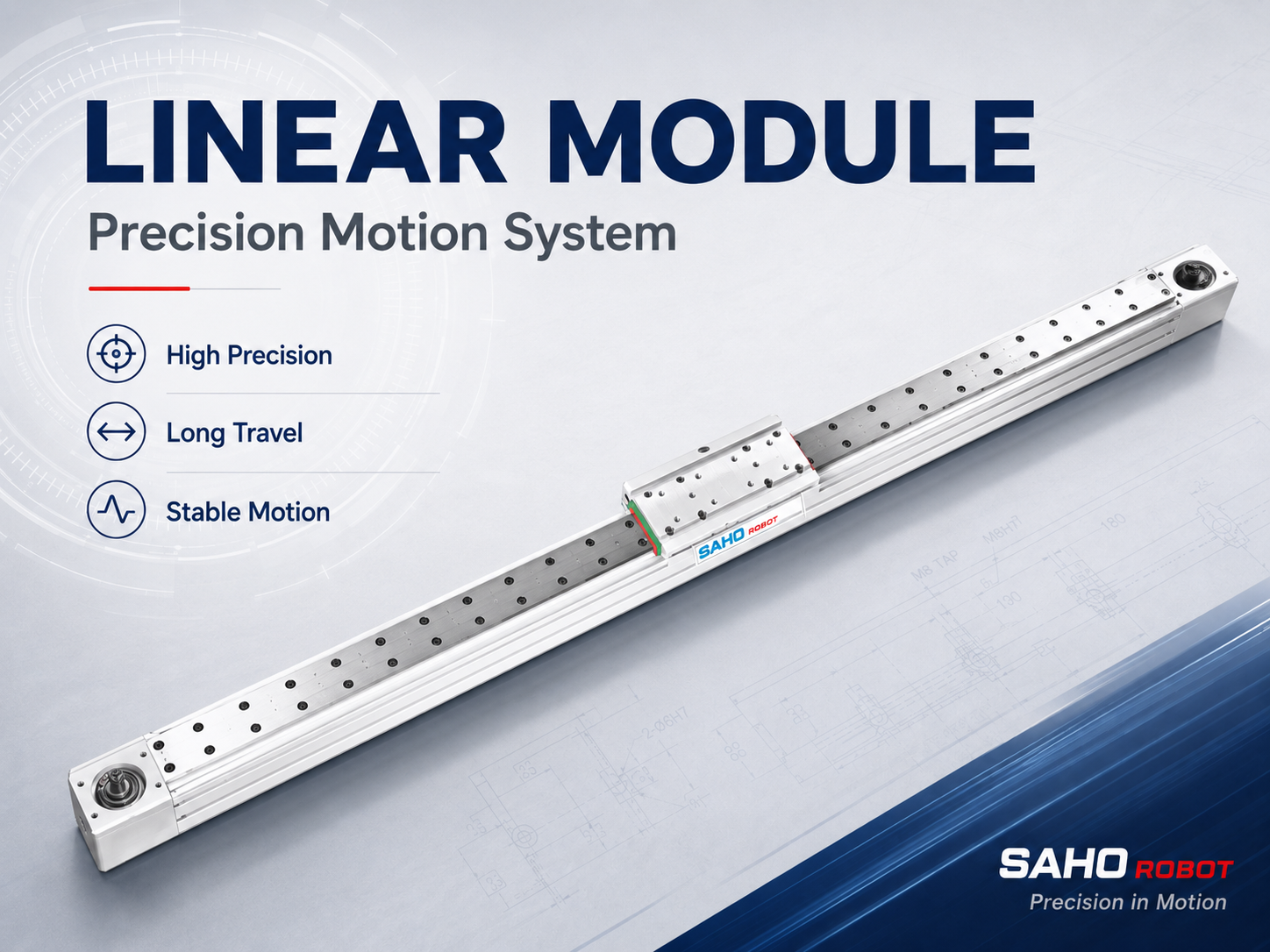
TR Series belt linear module options can support long-travel gantry handling and multi-lane packaging transfer. Wider-support configurations should be confirmed based on tooling layout.
Cleaner Packaging and Electronics Transfer
Some packaging systems operate near cleaner production areas. Examples include electronics packaging, medical device handling, display-related transfer, battery component handling, and precision part packaging. In these environments, smooth movement and cleaner structure become more important.
A clean-room-oriented belt module can help reduce exposed contamination points when the full machine is designed properly. Covers, guide maintenance, mounting access, and cleaning procedures should be reviewed together.
For clean transfer systems, the selection request should include operating environment, dust level, cleaning method, required stroke, load, speed, and installation direction. This helps decide whether MTG Series should be reviewed first.
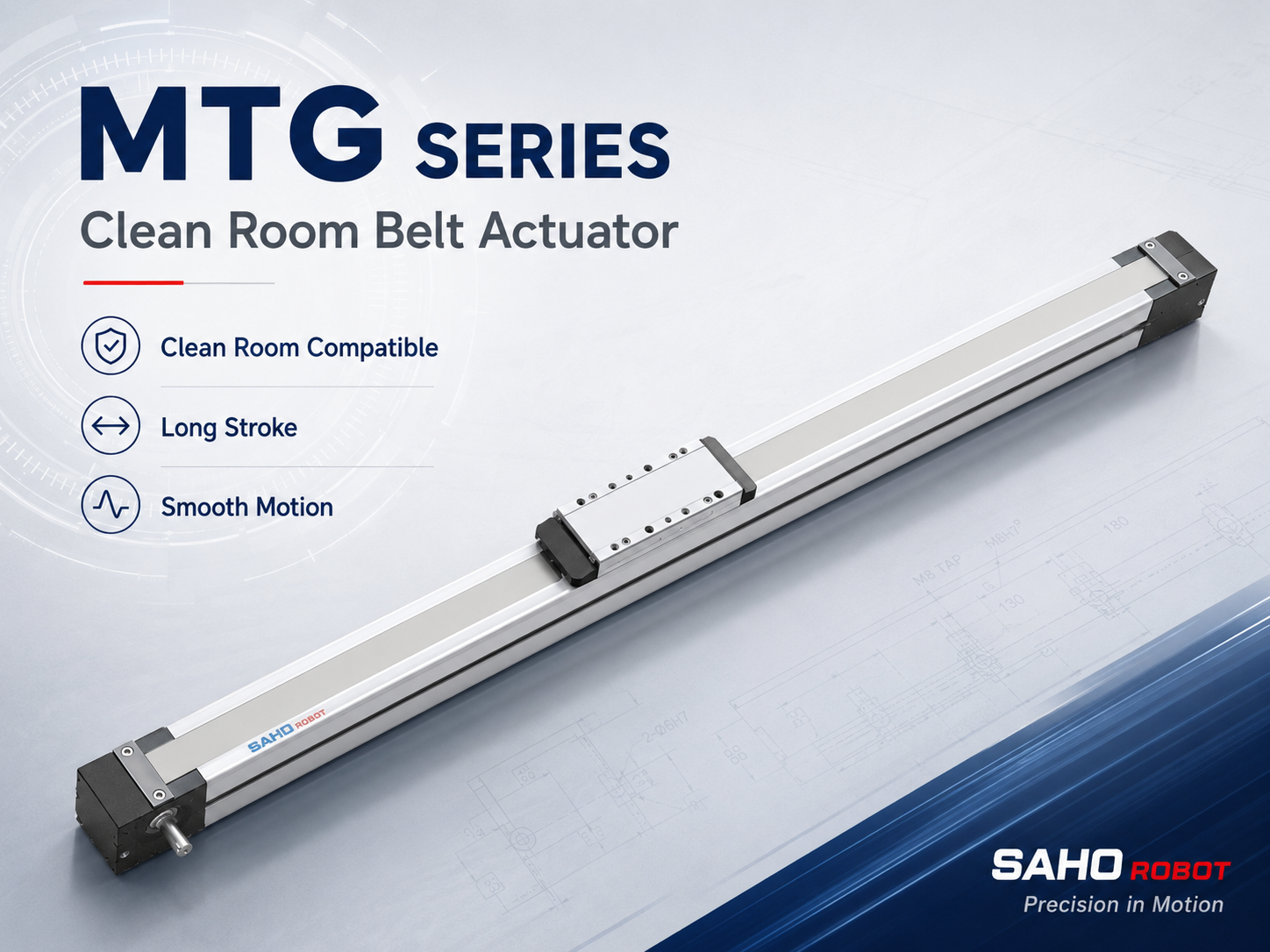
MTG Series supports clean-room-oriented transfer, cleaner packaging areas, and precision automation layouts.
Selection Tips for Packaging Projects
Define Stroke and Effective Travel
Stroke should be defined from the real product path. It should include pickup distance, transfer distance, release distance, and safe clearance at both ends. The total installed length must also fit the machine frame.
For long conveyor transfer, extra space is often needed for sensors, cable carrier movement, and motor mounting. A layout drawing is more useful than a stroke number alone because it shows whether the actuator can fit the machine without blocking service access.
Check Load, Moment, and Tooling Offset
Load calculation should include every moving part on the carriage. Product weight, tooling plate, suction parts, bracket, cable carrier section, air tube, and sensors all affect motion. The actual moving mass may be higher than expected.
Moment load also needs attention. A gripper mounted far from the carriage center creates overturning force. A wide pusher can create side load during contact. Tooling offset and load center distance should be shared during selection.
Match Speed With Cycle Time
Speed should be matched with the full cycle, not only the maximum travel value. Packaging movement includes acceleration, deceleration, dwell time, product release, sensor confirmation, and return stroke. Real cycle time depends on the full motion profile.
For short strokes, acceleration may affect output more than top speed. For long strokes, maximum speed may become more important. Speed and acceleration should be reviewed together with load and stroke.
Review Installation Direction Carefully
Installation direction changes the load on the guide and belt. Horizontal installation, side mounting, wall mounting, and inclined use create different mechanical conditions. The same module may need different sizing support depending on orientation.
Vertical or inclined use should be reviewed carefully because gravity affects holding behavior, belt load, and safety. A brake motor, counterbalance, or mechanical holding method may be needed depending on the machine design.
Plan Maintenance Access Before Installation
Maintenance access should be planned before the actuator is installed. Belt inspection, guide cleaning, lubrication, sensor adjustment, pulley area access, and motor service should remain practical. A compact machine layout should not hide important service points.
Regular checks help keep speed and repeatability stable. Guide contamination may increase friction. Loose belt tension may affect stopping behavior. Weak mounting can create vibration even when the actuator itself is suitable.
| Selection Item | Why It Matters | Data to Prepare |
| Stroke | Defines travel range, installed length, sensor space, and cable carrier movement. | Working stroke, clearance, total length limit, motor position. |
| Speed | Affects cycle time, product stability, and line output. | Target speed, acceleration, move time, dwell time. |
| Load | Influences guide load, belt force, motor torque, and stopping behavior. | Product mass, tooling mass, cable mass, hose mass. |
| Moment | Protects carriage stability during offset loading or side pushing. | Tool offset, load center, pusher length, contact force. |
| Installation | Changes guide load, belt behavior, and brake requirements. | Horizontal, side-mounted, wall-mounted, inclined, or carefully reviewed vertical direction. |
| Environment | Affects cover choice, maintenance cycle, cleaning method, and reliability. | Dust, fibers, powder, humidity, clean area need, operating hours. |
Related SAHO Belt-Drive Series
SAHO belt-drive linear modules should be selected according to the application function. A long-stroke packaging transfer axis, a Euro-standard machine frame, and a cleaner production environment may require different starting points. The following guide helps narrow the first product direction before detailed sizing.
TA Series: Long Stroke, Quiet Motion, and General Transfer
The TA Series is a strong starting point for long-stroke transfer, quiet operation, and high-speed repeated movement. It fits conveyor transfer, product spacing, carton movement, light tooling movement, and general packaging automation. Its timing belt structure supports fast travel over longer distances.
Review TA Series first when the project needs long travel, moderate payload, low noise, and good cost performance. The best sizing data includes stroke, moving mass, target speed, acceleration, installation direction, and duty cycle.
TR Series: Euro Standard Module Integration
The TR Series is suitable when the machine layout needs a Euro standard belt module structure. It can support modular equipment frames, multi-axis handling, and packaging machines that require clear mounting interfaces.
Review TR Series first when the system needs a structured profile, predictable mounting, and stable repeated transfer. It is useful for side transfer, lane movement, gantry layouts, and general automation handling inside packaging equipment.
Wider Support for Gantry and Cross-Axis Layouts
In some packaging machines, the axis must carry a cross beam or wider tooling plate. A wider carriage structure may help improve support and reduce twisting. Wider-support configurations are useful when gantry stability and tool support need closer review.
The final choice still depends on load center, moment, stroke, speed, and mounting direction. When the tooling extends away from the carriage, wider support should be discussed early instead of after mechanical design is finished.
MTG Series: Cleaner Transfer and Precision Automation Areas
The MTG Series is designed for clean-room-oriented belt-drive linear motion. It fits cleaner transfer systems, electronics packaging, medical device handling, TFT-LCD related movement, battery production, and precision automation layouts. In these applications, stable motion and cleaner structure are both important.
Review MTG Series first when the system needs long stroke, low noise, high-speed transfer, and cleaner production compatibility. The project data should include environment requirements, cover needs, speed, stroke, load, and installation direction.
| SAHO Series | Best-Fit Project | Review First When |
| TA Series | Long-stroke packaging transfer, product spacing, conveyor transfer, quiet repeated movement. | The axis needs speed, long travel, low noise, and practical maintenance. |
| TR Series | Euro standard module layouts, packaging machine integration, multi-axis transfer. | The machine needs a clear profile structure and modular mounting interface. |
| MTG Series | Clean-room-oriented transfer, electronics packaging, medical device handling, precision automation. | The environment requires cleaner structure, stable motion, low noise, and long stroke. |
How to Pair the Axis With Packaging Equipment
With Conveyors and Sensors
A packaging transfer axis usually works beside conveyors and sensors. The conveyor brings products into position, while sensors confirm timing or spacing. The linear axis then completes the transfer, reject action, side push, or lane change.
For stable performance, the actuator motion should match the conveyor rhythm. Sensor response time, product arrival variation, and downstream readiness should be included in the control logic. Even a strong mechanical axis may create unstable transfer if timing is not reviewed.
With Vacuum and Gripper Tooling
Vacuum tooling is common in tray loading, pouch handling, sheet transfer, and carton blank movement. It adds moving mass through cups, fittings, manifolds, hoses, and brackets. The full tooling package should be included in the load calculation.
Hoses must move without pulling against the carriage. A guided cable carrier can reduce drag and protect tubing. This small design detail can improve repeatability during long production runs.
With Vision, Coding, and Inspection Heads
Vision and coding systems often need adjustable positioning. A camera may move across product lanes, a print head may shift for different widths, or a scanner may change position for different package sizes. A belt-driven linear module can provide this movement with a compact mechanical layout.
Inspection quality may depend on settling time. If the carriage vibrates after stopping, the camera image can blur or the code position can shift. Acceleration, deceleration, frame stiffness, and carriage support should be reviewed together.
Common Mistakes to Avoid
Selecting Only by Stroke Length
Stroke is important, but it is not enough. A long axis with poor support can vibrate. A fast axis with weak mounting can lose stability. Stroke must be reviewed with speed, load, frame support, and installation direction.
A long-stroke transfer axis may also need cable carrier space and sensor space. If these details are missed, the installed machine may lose usable travel or become difficult to maintain.
Ignoring Tool Offset
Tool offset can create a large moment load even when the product is light. A long pusher plate or extended suction head may pull the load center away from the carriage. The guide and carriage may carry more stress than expected.
A simple tooling sketch can prevent this issue. The sketch should show product weight, tool length, carriage position, and load center. This information helps SAHO review the right carriage and module size.
Leaving Cable Routing Until the End
Cable routing should be planned early. Motor cables, encoder cables, sensor wires, air tubes, vacuum hoses, and lighting cables need safe movement. If routing is added late, it may reduce available stroke or create drag on the carriage.
Good cable management improves reliability. It reduces bending stress, keeps the axis cleaner, and makes service easier. Cable carrier direction and outlet position should be included in the selection request.
FAQ
Why are belt-drive linear modules used for long-stroke transfer?
Timing belt motion supports long travel, high speed, and repeated linear movement with a practical mechanical structure. This makes belt-drive modules suitable for conveyor transfer, carton movement, tray handling, product spacing, and multi-lane packaging systems.
What limits the payload of a belt-drive actuator?
Payload is limited by belt force, guide capacity, carriage size, motor torque, acceleration, installation direction, and load offset. In packaging equipment, the moving mass includes product, tooling, brackets, cables, hoses, and sensors.
Which SAHO belt series should be reviewed first?
TA Series should be reviewed first for long-stroke, quiet, high-speed transfer. TR Series should be reviewed first for Euro standard module integration and multi-axis machine layouts. MTG Series should be reviewed first for cleaner production and clean-room-oriented transfer.
Can a belt module be used in a gantry system?
Yes. Belt-drive modules are often used as long horizontal axes in gantry systems. They can support pick-and-place, tray loading, lane transfer, carton handling, and inspection positioning. Gantry performance depends on alignment, frame stiffness, cross beam design, cable routing, and tooling weight.
What information helps SAHO recommend a suitable module?
The most useful information includes stroke, payload, speed, acceleration, repeatability target, installation direction, cycle time, tooling layout, load center, operating environment, and motor preference. Drawings help confirm mounting space and cable routing.
Conclusion and Practical Selection Advice
High-speed packaging and transfer systems need stable long-stroke movement, smooth acceleration, low noise, practical maintenance, and reliable integration with conveyors and sensors. A suitable belt-driven linear axis can support these needs when the full motion profile and mechanical layout are reviewed together.
For a Belt Linear Actuator project, the best selection process starts with real application data rather than a model name alone. Stroke, load, speed, accuracy, installation direction, duty cycle, tooling offset, and operating environment all affect the final recommendation.
Define the full motion cycle. Include travel distance, speed, acceleration, dwell time, return stroke, and operating hours.
Calculate the real moving load. Include product, tooling, brackets, cables, hoses, and load center offset.
Match the series to the application. Review TA for long-stroke quiet transfer, TR for modular integration, and MTG for cleaner production areas.
Contact SAHO for Packaging Transfer Axis SelectionFor packaging transfer, conveyor handling, gantry movement, clean production, or inspection positioning projects, prepare stroke, load, speed, accuracy, installation direction, cycle time, tooling layout, and environment details. SAHO can review the parameters and recommend a suitable belt-drive linear module series. |







-
-
 English
 -
 Français
 -
 Deutschland
 -
 Italia
 -
 Polska
 -
 España
 -
 Русский язык
 -
 日語
日語 -
 한국
한국 -
 Türkiye
 -
 português
 -
 بالعربيةês
 -
 Tiếng Việt
 -
 คนไทย
คนไทย -
 简体中文
简体中文 -
繁體中文
-