

Date:2026-04-15 Click:497
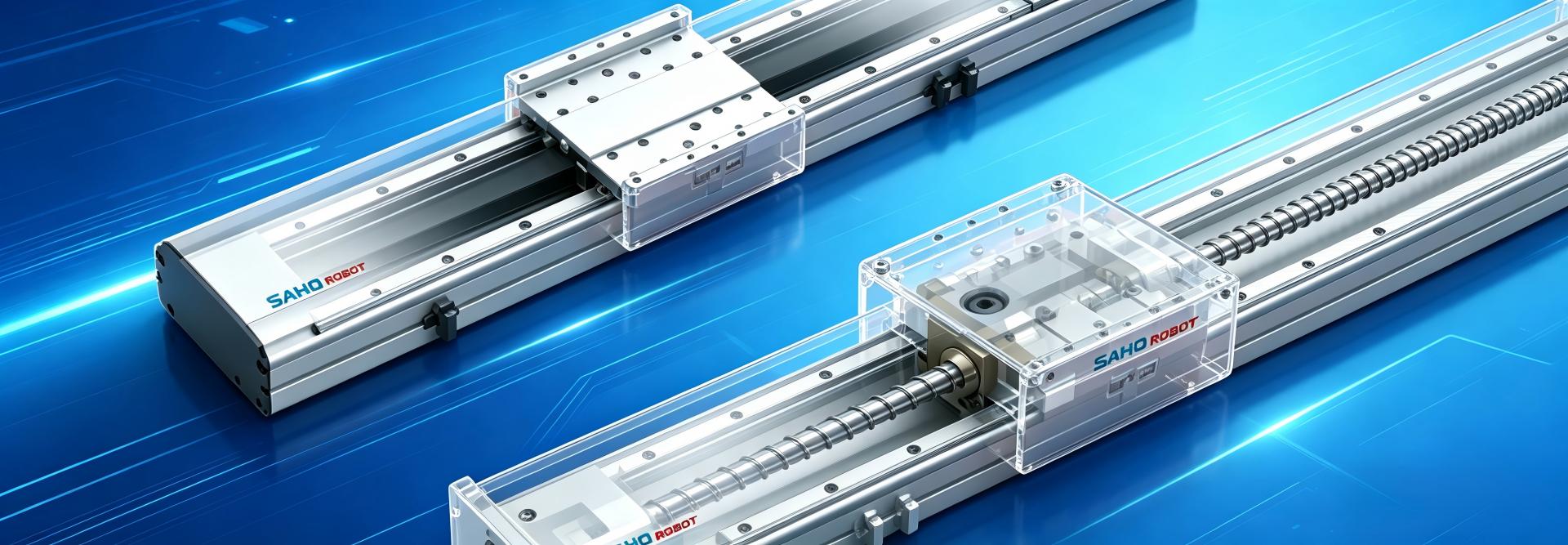
Belt Drive or Screw Drive?
The Right Choice Depends on Your Application
Advancements in linear motion technology have introduced multiple drive solutions for converting rotary motion into linear motion. Among them, belt drives and screw drive are two of the most widely used systems—each offering distinct advantages for different applications.
Selecting the right solution requires evaluating key factors such as load capacity, orientation, stroke length, speed, precision, and environmental conditions. Precision can be further defined as:
Accuracy – how close the system reaches a target position
Repeatability – how consistently it returns to the same position
In addition to performance, total cost of ownership should also be considered, including maintenance, lifespan, and operating conditions.
Belt Drive Systems
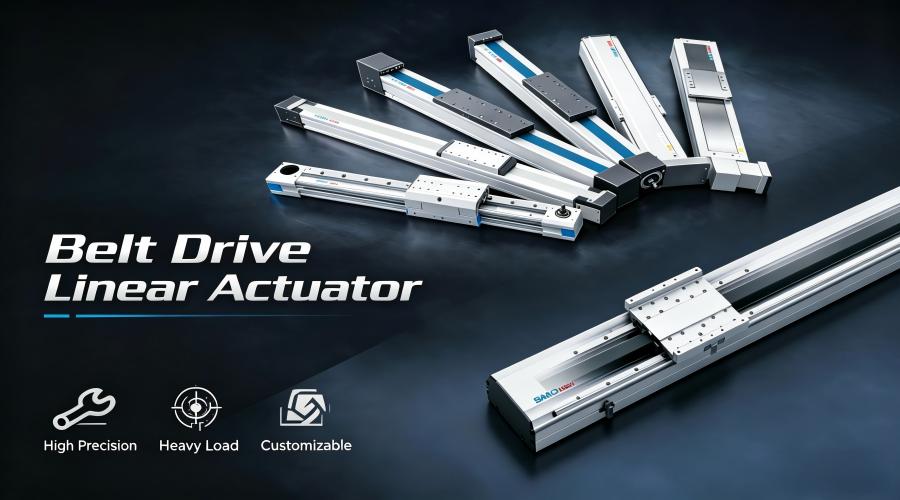
Belt-driven actuators use a timing belt and pulley mechanism to convert rotary motion into linear movement. The belt’s toothed design ensures positive engagement, minimizing slippage and enabling efficient power transmission.
Advantages
Long stroke capability – up to 6 meters, ideal for material handling
High speed – typically 3–5 m/s for long travel applications
High efficiency (~90%) – suitable for continuous operation
Lower motor RPM requirements
Supports high-duty cycles
Limitations
Lower accuracy and repeatability compared to screw drives
Requires higher input torque (often needs gear reducers)
Potential back-driving/load drift, especially in vertical setups
Periodic belt re-tensioning required
Performance may degrade in corrosive environments
Possible vibration (velocity ripple) due to belt dynamics
Screw Drive Systems
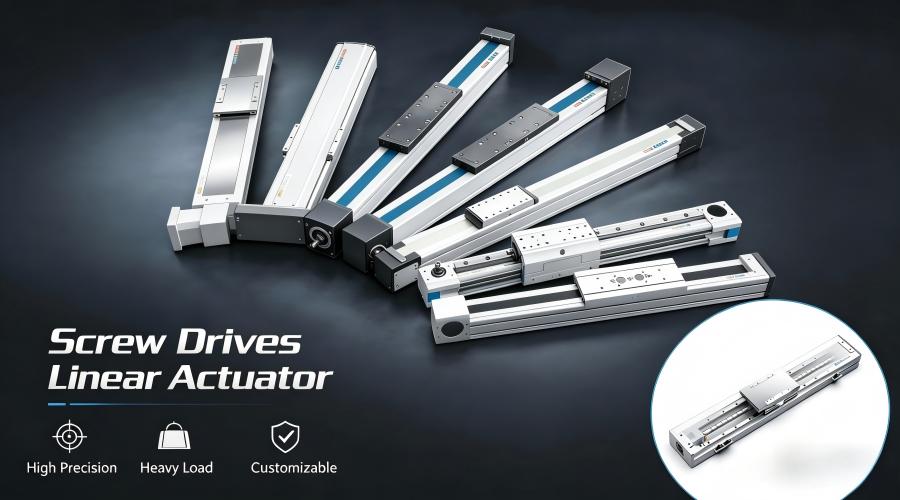
Screw Drive actuator convert rotary motion into linear motion using a threaded shaft and nut mechanism. They are available in both fixed and non-fixed designs, featuring a compact structure, smooth movement, and high positioning accuracy.
Advantages
High precision and repeatability – ideal for positioning tasks
Lower cost compared to belt systems
Self-locking capability – prevents load drift in vertical applications
Smooth and quiet operation
Wide range of lead options and diameters for flexibility
Minimal maintenance with self-lubricating polymer nuts
Suitable for short stroke, high-response applications
Resistant to contamination and suitable for wash-down environments
Limitations
Lower load capacity (especially with polymer nuts)
Limited speed (typically ≤1000 rpm)
Not ideal for high-speed + heavy-load + continuous duty scenarios
Heat buildup may affect performance in demanding conditions
Conclusion
There is no one-size-fits-all solution.
Choose a belt drive for long stroke, high speed, and continuous operation
Choose a screw drive for high precision, short stroke, and stable positioning
A careful evaluation of your application requirements will ensure the most efficient and reliable actuator selection.







-
-
 English
 -
 Français
 -
 Deutschland
 -
 Italia
 -
 Polska
 -
 España
 -
 Русский язык
 -
 日語
日語 -
 한국
한국 -
 Türkiye
 -
 português
 -
 بالعربيةês
 -
 Tiếng Việt
 -
 คนไทย
คนไทย -
 简体中文
简体中文 -
繁體中文
-